The real research behind $9.99: what the left-digit effect studies actually show
Charm pricing isn't folklore — but the classic evidence for it is narrower and older than most pricing decks suggest. Here's what the actual studies say.
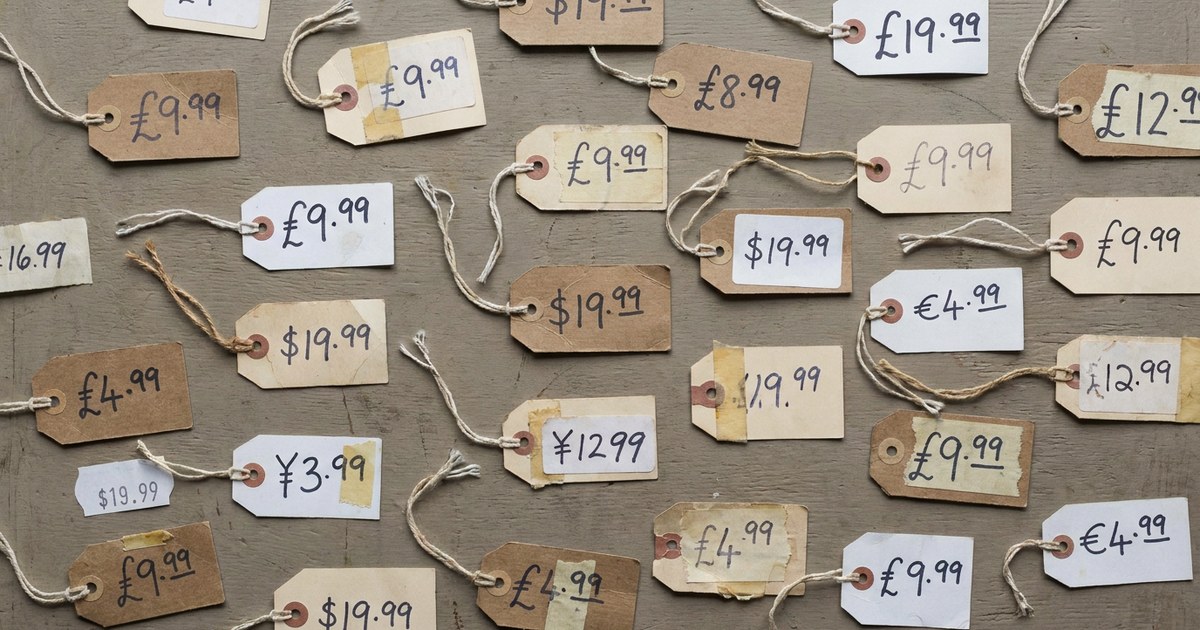
Charm pricing — ending a price in .99 or .95 instead of a round number — is one of the most cited "facts" in pricing, but the specific evidence behind it is thinner and older than most internal pricing decks imply. The most frequently cited empirical source is Anderson and Simester's 2003 field experiment, published based on a mail-order clothing catalog study: identical items were mailed to different customer segments at different price points, including $39 versus a lower $34 price for the same garment. The $39 version sold better, a result attributed to the "left-digit effect" — shoppers anchoring on the leftmost digit of a price and mentally rounding down.
Subsequent work generally puts the average lift from 9-ending prices at roughly 24% in unit sales versus the adjacent round price, with the strongest effects showing up when a discounted price is displayed directly next to a round "original" price — reinforcing an anchoring effect on top of the left-digit effect. That combination, not charm pricing alone, is doing much of the work in many real-world promotional displays.
The effect is not universal. Research on luxury and premium categories has repeatedly found that round numbers signal quality and exclusivity, and that charm pricing can undercut a premium brand's positioning — which is why you rarely see $499 pricing at a luxury retailer, even though $499 will reliably outsell $500 in a mass-market context. Cultural variation matters too: several European markets, notably Germany, show a weaker or inconsistent charm-pricing effect compared to U.S. consumers.
The practical warning for pricing teams: treat the 24% figure as a directional planning prior from 20-year-old catalog data, not a guaranteed uplift for your specific product or channel. The mechanism (left-digit anchoring) is well replicated; the exact magnitude in any given category, price range, or country is not, and is worth testing rather than assuming.
Get the bi-weekly brief
Teasers of the latest articles, delivered every two weeks.