Running a Kano survey to prioritize price and feature tradeoffs
Not every feature deserves a price tag, and not every price-sensitive feature should be free. The Kano model gives you a structured way to tell the difference.
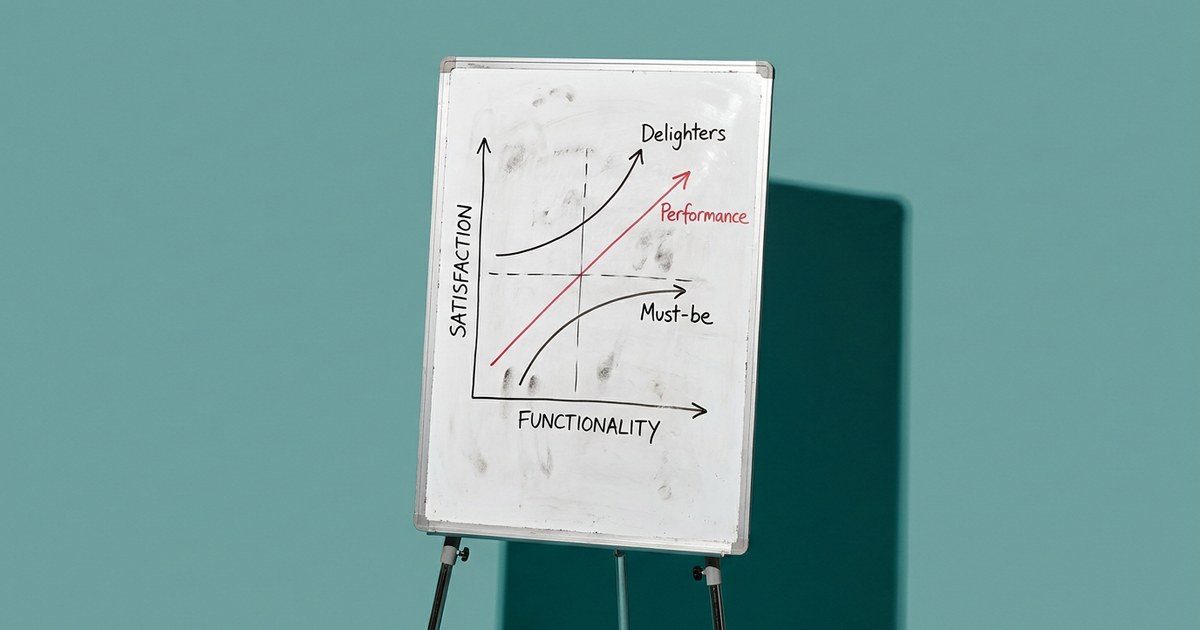
When a product team debates whether a feature should be included in the base price, sit behind a paywall, or be cut entirely, the conversation often turns into opinion versus opinion. The Kano model, developed by Noriaki Kano in the 1980s, replaces that debate with a simple survey structure that sorts features into categories based on how customers actually react to having or not having them.
For each feature, ask two questions: "How would you feel if this feature were present?" and "How would you feel if this feature were absent?" — each answered on a five-point scale from "I like it" to "I dislike it." Cross-referencing the two answers sorts every feature into one of several buckets: Must-Be (its absence causes dissatisfaction, but its presence doesn't create delight — think basic security or reliability), Performance (satisfaction scales roughly linearly with how well it's done), Attractive (its absence isn't noticed, but its presence delights), or Indifferent (customers don't care either way).
The pricing implication follows directly from the category. Must-Be features are poor candidates for a paywall — gating them frustrates customers without creating perceived value, and they belong in every tier. Performance features are natural candidates for tiered pricing, since more of them genuinely creates more perceived value proportional to price. Attractive features are excellent candidates for a premium tier or add-on, since they create disproportionate delight relative to their cost to build. Indifferent features are usually not worth building at all, let alone pricing.
Run this with at least 100 respondents from your actual buyer base if you can, since the categorization can shift meaningfully across segments — a feature that's Must-Be for enterprise buyers is often merely Attractive, or even Indifferent, for small-business buyers. Re-run it periodically too: features reliably migrate from Attractive to Performance to Must-Be over a few years as a category matures and customer expectations catch up, which is exactly why last year's premium differentiator is often this year's baseline expectation.
Get the bi-weekly brief
Teasers of the latest articles, delivered every two weeks.